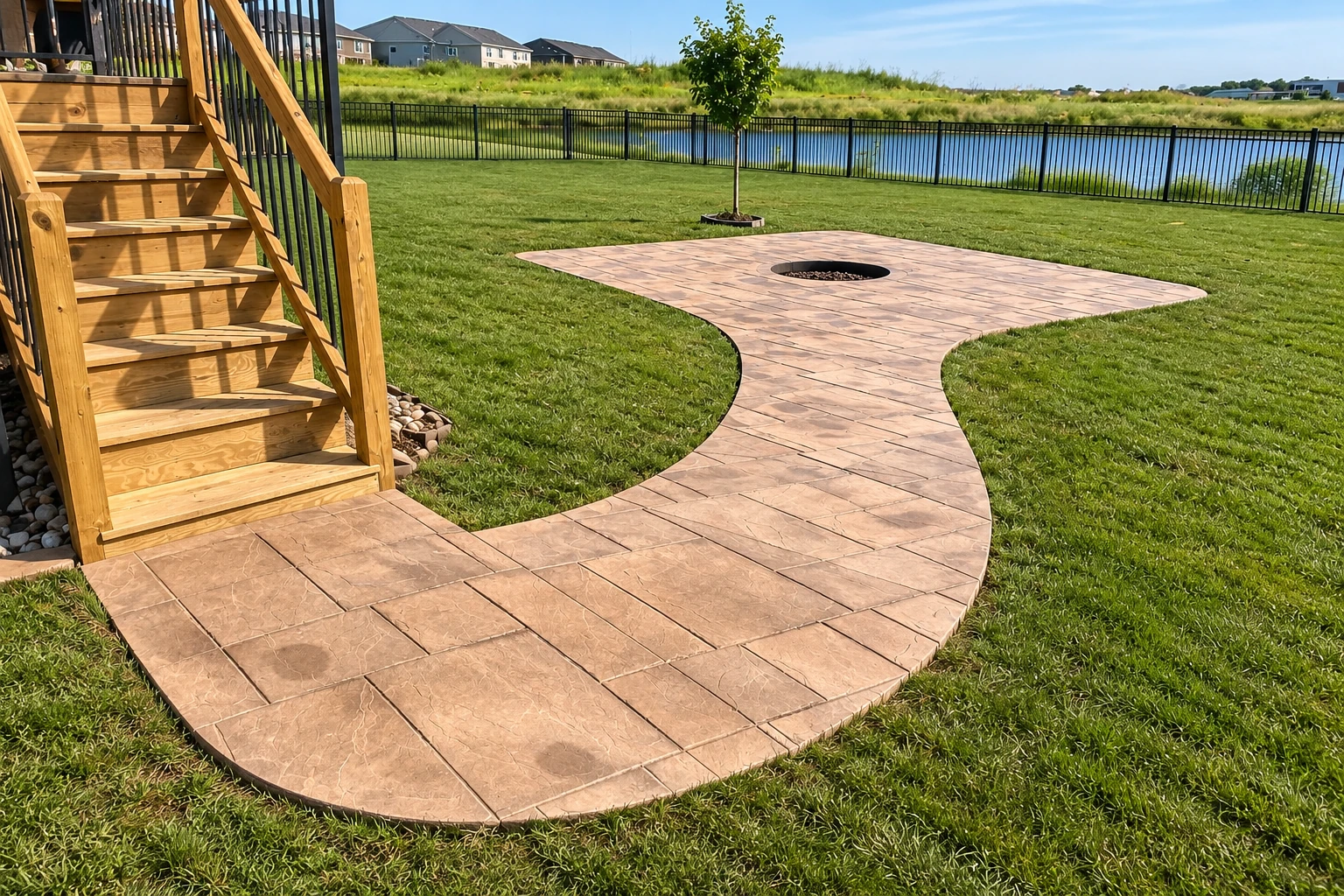
Most of a sidewalk's life is decided under it. We strip the topsoil, roots and soft dirt down to the subgrade, the firm ground the slab rests on, and pack any fill we loosen so the walk gets the same support from end to end. That includes the spots people skip, like over a utility trench or where the walk meets the driveway, because a soft patch there is where a panel drops first.
Three things move the price most. The length and width of the walk set how much concrete and forming it takes. How much old concrete, roots and soft dirt have to come out sets the digging and hauling. A stretch that crosses the driveway takes extra work too. Your written estimate puts each of those on its own line, so you can see where the money goes.
The schedule turns on the weather, since a soaked base has to dry out before we pour, and on the cure, the wait while fresh concrete hardens before you put weight on it. When the walk runs along the street, the city's permit has to come before any digging, and we pull it with the city as your hired contractor so you aren't taking on that role yourself.