
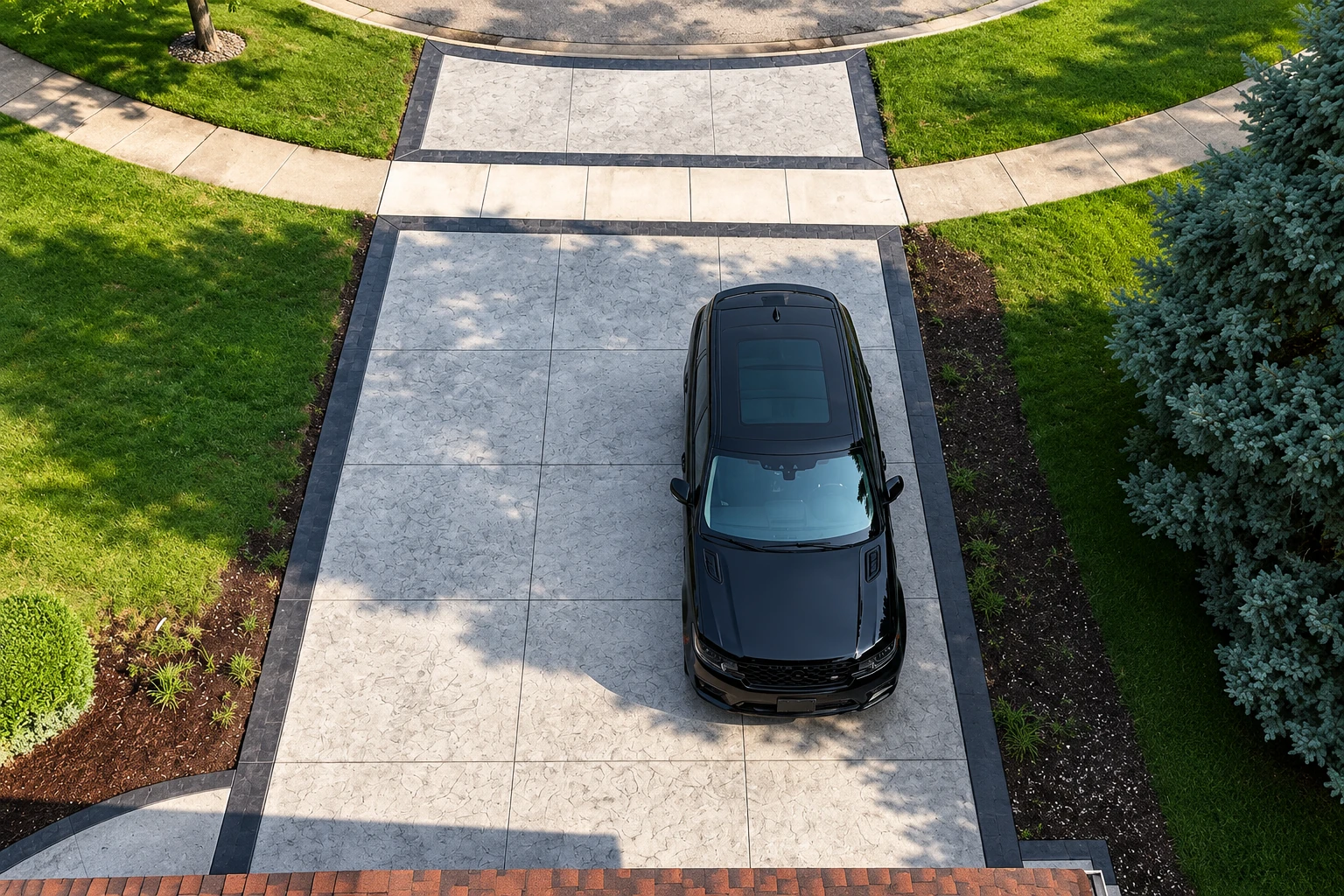
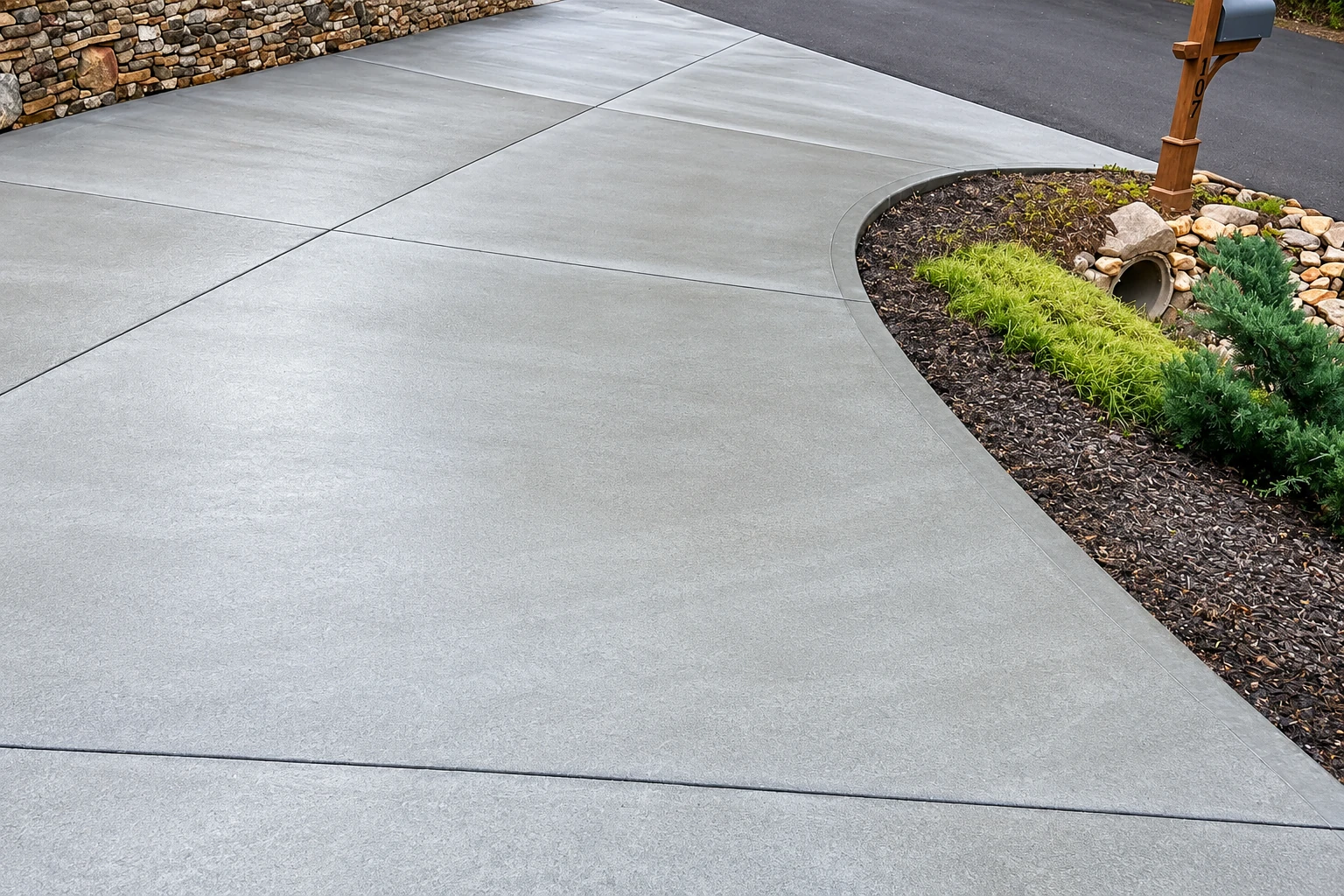
Concrete driveway building
When your driveway is cracked, sinking or holding water, we break it out, dig and pack a new base, set rebar, the steel that holds the slab together, and pour.
K&L Laredo Concrete Construction is a concrete contractor in Laredo, TX. We dig out and pack the base, then pour driveways, patios, slabs, foundations and walls for homeowners and small businesses in the city and the cities around it.
K&L Laredo Concrete Construction pours driveways, patios, sidewalks, garage floors, slabs and foundations across Laredo. For small businesses we also do parking lots, shop floors and retaining walls. Most of our calls are homeowners with a cracked or sinking driveway, or a backyard that needs a patio, and I come out to look at every one myself.
What we see most around Laredo is concrete that failed from underneath. Someone pours a driveway on dirt that was raked flat instead of dug out and packed. The subgrade, the ground the slab sits on, settles, and a few years later you've got cracks, a sunken section and water pooling by the garage. A big part of our work is tearing that out and building the base back right.
The other half is new work. Families add a back patio or a pool deck for evenings outside, and small business owners call about a lot, a shop floor or a foundation. Every one of those starts with the same questions. Where does the water go, what's the ground like, and how thick does the slab need to be for what's going on top of it?
When your driveway is cracked, sinking or holding water, we break it out, dig and pack a new base, set rebar, the steel that holds the slab together, and pour.
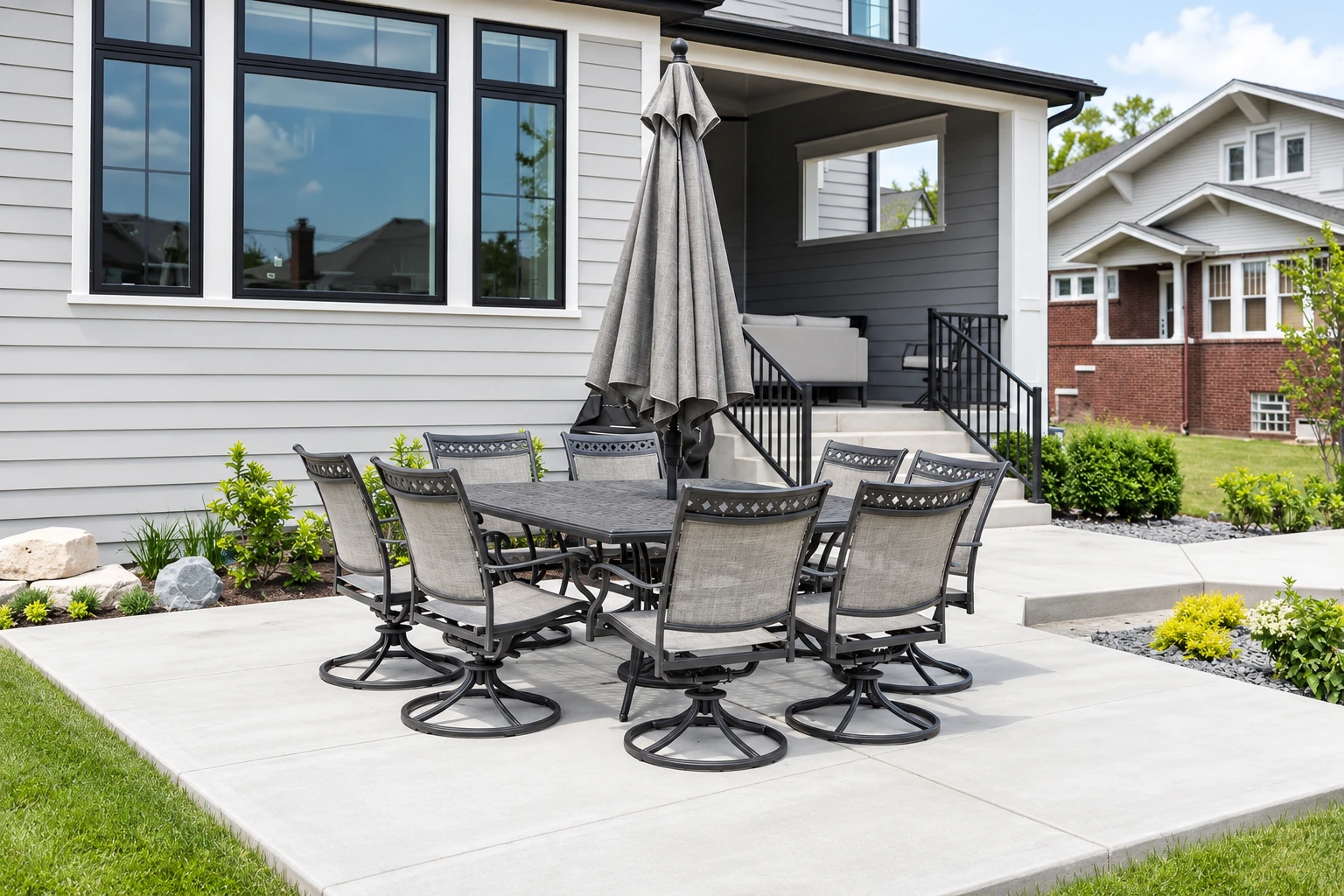
If your backyard is bare dirt or tired pavers, we pour a patio sloped away from your house, so rain runs to the yard instead of toward your foundation.
Stamped concrete gives a patio or walkway the look of stone or brick in one pour, and it sits on the same packed base and joints as any slab we place.
We tear out sidewalks that have heaved or broken into trip spots and replace them, with joints cut so future cracks run in straight lines instead of across the walk.
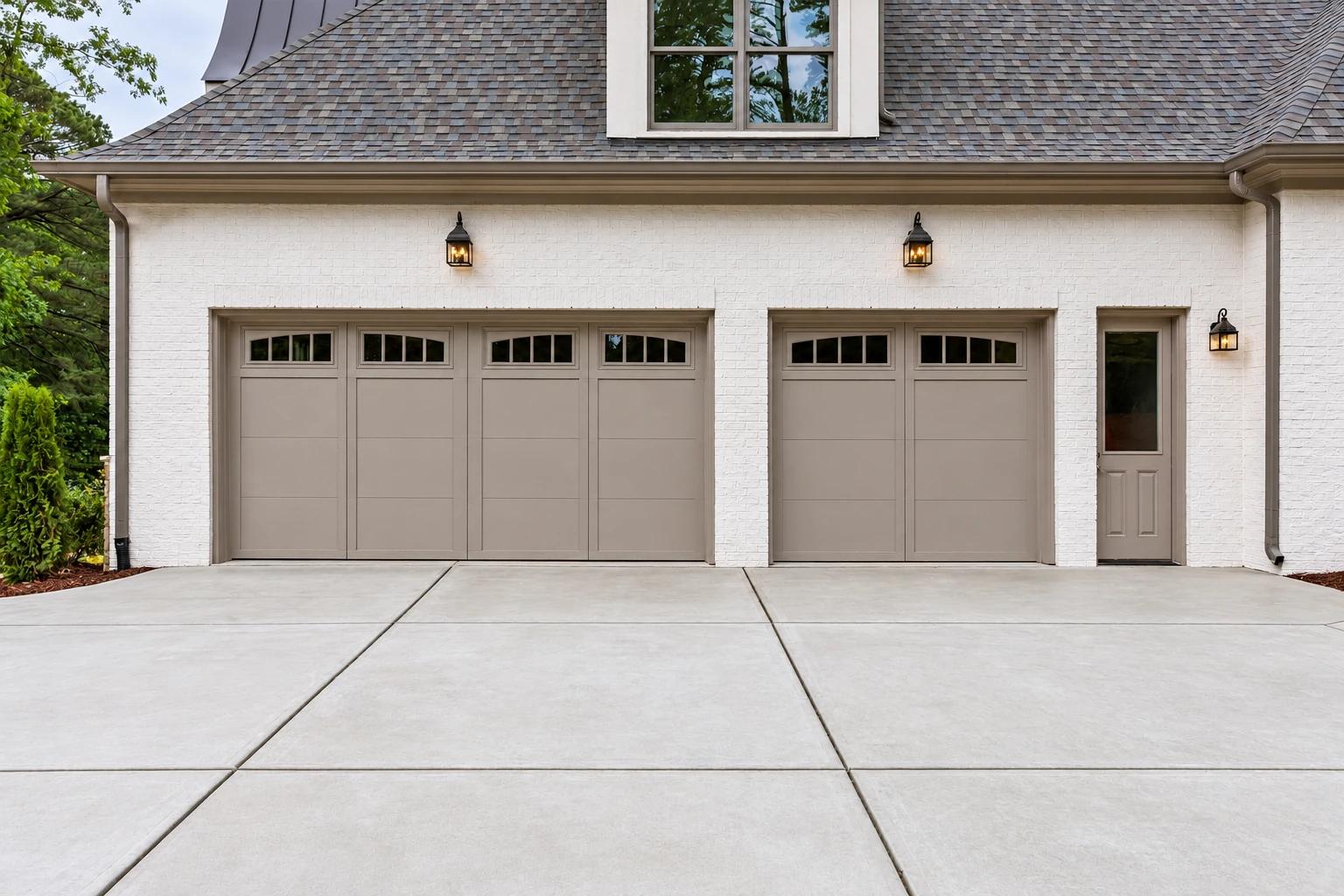
If your garage floor is chipping, dusty or cracked, we pour a new slab thick enough for your vehicles, with a smooth finish that's easy to sweep out.
Decorative concrete adds color, scored patterns or an exposed stone finish to entries and patios when plain gray doesn't suit the front of your house.
On a sloped lot where dirt washes onto the driveway or yard, a concrete retaining wall holds the grade, with drainage behind it so water doesn't push it over.
For shops, additions and storage buildings, we pour interior floors flat and level, so shelving, equipment and finish flooring sit right on top.
Around a pool, we pour a deck with a texture that holds wet bare feet and a slope that carries splash water away from the pool.
When front or back steps crack, settle or pull away from the house, we rebuild them with even risers, so nobody misjudges a step at night.
For a new house, addition or building, we pour the slab foundation on a dug-out, packed base with rebar set first, because nothing built above it fixes a bad slab.
When a project needs more than a slab, we set forms and pour the foundation to the plans. If the job calls for an engineer, I'll tell you up front.
Small business owners call us for parking lots that drain, carry delivery trucks and stay level. We plan the entrances, spaces and runoff before we pour.
Footings carry the weight of walls, columns, carports and fences down into firm ground, so we dig them to solid soil before any concrete goes in.
If part of a slab has dropped, we figure out why before we talk about raising it. When the problem needs an engineer, I'll say so.
We cut concrete for new doorways and utility trenches, to remove a damaged section, or to add control joints, the straight cuts that tell a slab where to crack.
Send the form and we'll reply within one business day to set a time. I come out to your Laredo property myself to measure and look at the base and the drainage. Then I write the estimate out line by line. It's free, and there's no obligation.
(956) 508-9209In Laredo, residential permits come from the city's Building Development Services. When your job needs one, we pull it as your hired contractor. That matters because a homeowner who pulls the permit is considered the contractor on the project. The permit and any city inspection set part of the schedule, so we plan the pour date around them.
Before you hire anyone, ask whether they're registered with Building Development Services, because the city requires that of anyone who does work in Laredo. A general contractor registers with a $60 fee and an ID. It's a low bar, so a contractor who skipped it is worth a second look. Electrical work in Texas needs a state license, so lights or outlets for a new patio or garage go to a licensed electrician.
The price moves with the size of the slab, its thickness, how much old concrete comes out and how much digging and packing the base needs. Rebar, stamped or colored finishes and tight access for the truck add to it. The schedule turns on the permit, the weather on pour day and curing, the days the concrete needs to gain strength before you use it. Your estimate lays out each piece.
I learned this trade from my dad. I was setting forms and pulling screed boards on his jobs from the time I was a teenager, and I started K&L in Laredo in 2021 after years of working beside him. I come out to look at every job myself, and our crew does the work with me on site, so the person who quoted your job is there for the pour.
When a budget gets tight, the base is the first thing people want to cut, because nobody sees it on day one. I won't cut it. A clean broom finish, the light texture that keeps the surface from getting slick, does nothing for a slab that's settling with the dirt under it. If I don't believe in a job, I'll tell you no or send you to an engineer.
We're fully licensed and insured, and your estimate is written line by line, so you know exactly what you're paying for before we start. Your satisfaction, guaranteed. Call (956) 508-9209 or send us the form to set up a visit.
Concrete fails for the same few reasons on most lots we see around Laredo. These are the things we check before every pour here, and how each one affects how long your slab lasts.
Concrete poured in the middle of a hot Laredo day dries on top before it sets underneath. That leaves a weak, dusty surface that starts chipping later. We schedule pours for early morning when we can and keep the surface damp while it cures, so the top gains strength along with the rest of the slab.
Plenty of lots around Laredo still have mesquite or huisache on them or close by. Their roots and old stumps rot out over the years, and a slab poured over them settles wherever they used to be. Before any forms go up, we dig out the roots and soft soil and pack firm fill in their place.
Before we pour, we look at where water runs on your lot, and we set the slab to fall away from the house, not toward it. If you think your property may sit in a floodplain, check the city's Interactive GIS Portal, which has floodplain maps. The city also has a Floodplain Development Permit application, so ask the city about it if your lot shows up on the map.
Concrete shrinks as it dries, so every slab cracks somewhere. We cut control joints the same day we pour, so the slab cracks along them and out of sight. A joint cut late or skipped leaves the slab to pick its own crack, and that's why so many old driveways here have a crack running across the middle.
There's no honest flat price, because a driveway's cost depends on its size and how much base work your ground needs. A stamped or colored finish costs more than a plain broom finish, and so does a thicker edge where trucks turn. We price it on site and write out each item, so you can see what changes if you add or drop something.
You can walk on a new driveway well before you can park on it, because concrete keeps gaining strength for days after the pour. Putting a car on it too early can crack the edges. On pour day, we tell you which day it's ready for feet and which day it's ready for cars, based on the mix and the weather.
The city's residential permit list doesn't name driveways or patios, so check with Building Development Services before you pour. The list names new homes, remodels and additions, block fences and demolitions, not flatwork, the slabs on the ground like driveways and patios. You can read the city's permit requirements yourself. The city doesn't allow work without a permit when one is needed, and a posted permit helps the building inspector find your property.
Usually not. A new layer over a slab that's settling follows the old cracks and the bad base under them. We break out the old concrete, dig down to firm ground and pack a new base, because that's where most of a driveway's life comes from.
Move your vehicles out the night before, so the crew and the truck can get in without blocking you in. Mark any sprinkler lines, buried cables or anything else underground that you know about. Keep kids and pets off the fresh slab until we tell you it's ready.
The city says building construction should comply with its list of codes, and the International Residential Code is on that list for houses. That's the code a slab foundation or footing on a home is built to here. The city keeps the full list on its building permit resources page.
Call (956) 508-9209 any day of the week from 6 AM to 11 PM, or use the form, and I'll come look at your base and drainage before anyone talks about a pour date.