K&L Laredo Concrete ConstructionK&L Laredo Concrete Construction

Concrete footings in Laredo TX - a firm base under your walls and columns

Planning a room addition, a wall or a porch? We dig footings down to firm ground so what you build has a steady base.

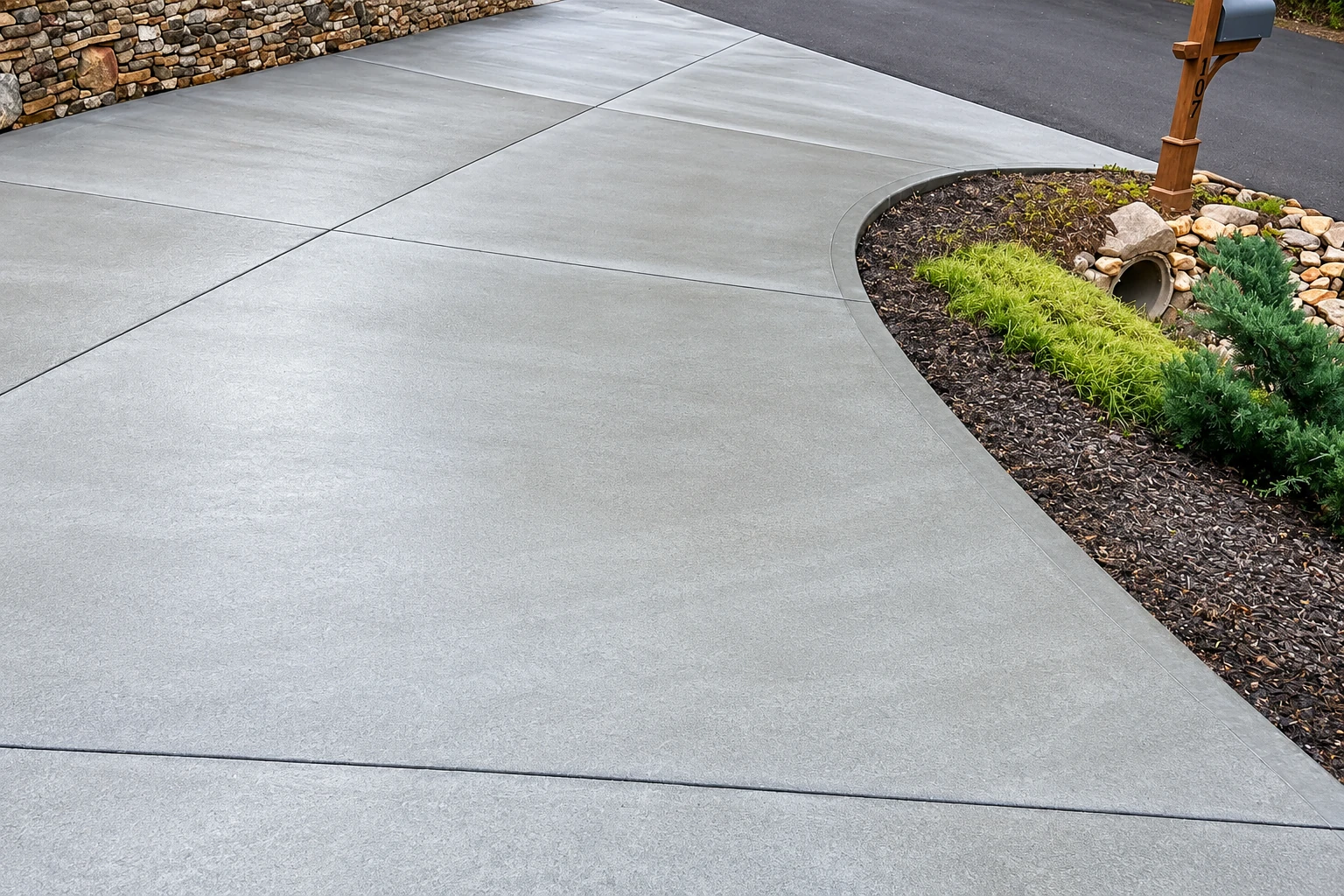
Smooth concrete driveway with expansion joints and a curved edge around a landscaped garden bed.

Concrete footings are the concrete base under a foundation wall, a masonry wall, a column or a pier. On a footing job in Laredo, TX, we set that base so it carries the weight of whatever you build on top of it.

What do concrete footings do, and which kind does my project need?

A footing sits in a trench in the ground, and the wall, porch, addition or column goes on top of it. The kind you need depends on whether your project rests on walls or on columns, so that's the first thing I ask. The footing gets buried soon after the pour, which is why the digging matters more than anything you'll see.

The price moves with how many footings there are, how far we dig to reach firm ground, how much steel goes in and how easy it is to get a concrete truck to the spot. Your written estimate puts each part of the work on its own line, so you can see where the money goes.

The schedule mostly turns on three things. One is the permit, when the job needs one. Another is a soil engineer's visit, if the ground calls for it. The last is the weather on pour day. When your job needs a permit, we pull it with the city.

What keeps a footing from settling under the load

Nobody sees a footing once it's covered, so you can't check the work later by looking at it. These are the parts of the job that decide whether it holds.

Dig to firm ground

We dig past loose topsoil and old fill to ground that hasn't been disturbed, then clean the loose dirt out of the bottom of the trench. Concrete poured on loose soil settles as that soil packs down, and the wall or post above goes down with it.

Steel set off the dirt

Rebar is the steel bar that runs inside the concrete, and it holds the footing together when the ground pushes or pulls on it. We set it up on supports so the concrete wraps all the way around it, because steel lying in the mud doesn't do its job.

Water kept out of the trench

Before we dig, we look at where rain runs across your lot. A trench that fills up every time it rains softens the ground the footing depends on, so we plan the dig and the pour around keeping that bottom firm and dry.

Pour early, cure slow

We pour early in the day when we can, because concrete that sets too fast in afternoon heat ends up weaker. Curing is the wait while concrete gains strength, and we keep the footing damp through that wait before anything heavy goes on it.

What happens when you call about concrete footings in Laredo?

Here's how a footing job goes with us, from your first call to the walk-through at the end, and where the city's permit time fits in.

  1. 1

    Call or send the form

    Call (956) 508-9209 or fill out our contact form and tell us what you're building. It helps if you know whether it rests on walls or on columns.

  2. 2

    I measure and write it up

    I come out, look at the spot, take measurements and ask what the footings will carry. You get a written estimate with each part of the work on its own line.

  3. 3

    Permit, prep and pour

    If the job needs a permit, we handle it with the city, and the city can take up to 21 days to process one, so we plan the start around that wait. Then we dig, set the steel, pour, finish and cure.

  4. 4

    Walk the job together

    Before we pack up, I walk the finished footings with you. We'll tell you how long to let the concrete cure before framing or block goes on top.

Request an estimate

How we plan and pour concrete footings

Once I know what the footing has to carry, I look at the ground. If the soil is a question mark, I'll tell you to get a soil engineer out before we dig rather than guess. Once a wall sits on a footing, there's no easy fix for bad ground under it. When we know the ground, we dig to firm soil, set the steel and pour.

Footing work often ties into other work. If part of your house has already dropped, foundation raising may need to come first so the new work lines up with the old. If a footing has to go where a slab or patio already sits, concrete cutting opens a clean section, so we don't have to break up more than we need to.

I tell every customer about the trade-off in where the money goes. The digging, the clean trench and the steel get buried the day after the pour, so they're the first thing people want to trim. I won't trim them, because everything you build afterward sits on them.

Footings poured on their own

We pour the footings and let them cure, and then the walls, block or posts go on top. This is the usual way when the footings carry a wall, a porch or a row of columns.

Footings poured with a slab

When a slab is going in too, the thicker edges that carry the walls can go in during the same pour as the slab. If the plans call for it, one pour can save a trip.

Get a written estimate for your footing job

Send the form and we'll reply within one business day to set a time for me to come out and measure. The estimate is free and done on site, and there's no obligation to go ahead.

(956) 508-9209

sales@laredoconcreteconstruction.com

Concrete footings and foundation work in Laredo

Laredo's Building Development Services processes permits and says work without a permit isn't allowed. Its list names porches and additions but not footings, so the list doesn't settle whether your footing job needs one. That office is the place to ask. The city also says building work should follow the International Residential Code, which it uses for the safety standards of a home.

The ground here is why I ask so many soil questions. The most common soil in Webb County is a clay called Catarina, which turns sticky when wet and rock-hard when dry, so the same lot can dig very differently after a rain than in a dry spell. In parts of the county, bedrock sits within 40 inches of the surface, and some land floods from time to time.

K&L Laredo Concrete Construction is based in Laredo and works in Laredo and the cities around it. On footing jobs here, we run into clay that fights the shovel in a dry summer and soft spots after wet weather, so we look at the ground before anyone starts digging.

Why Laredo homeowners call K&L Laredo Concrete Construction for footings

I learned concrete from my dad, setting forms and pulling screed boards on his jobs from the time I was a teenager. I started this business in Laredo in 2021, so we've been at it five years on our own. I come out to look at every job myself, and our crew does the work with me on site.

We're fully licensed and insured. We're best known for driveways, patios and slabs on a solid base, and footings get that same care below the dirt. Your satisfaction, guaranteed. To get started, call (956) 508-9209 or send us your project details.

Foundation raising

If walls are cracking or doors are sticking because part of the house has dropped, raising it may need to happen before a new footing can line up.

Concrete cutting

When a new footing has to go through an existing slab, patio or driveway, a clean saw cut opens just the section we need and leaves the rest alone.

Where we pour footings around Laredo

We're based in Laredo, TX and work in Laredo and the cities around it. If your lot is nearby, call and tell us where it is.

Questions about concrete footings in Laredo

How much do concrete footings cost in Laredo?

The cost depends on how many footings you need, how deep we dig to reach firm ground, how much steel goes in and how easy the spot is to reach. If the ground calls for a soil engineer, that visit adds to the budget. I measure on site, and you get a written estimate with each part priced on its own line.

Which type of concrete footing does my project need?

If your project rests on walls, it needs a strip footing, which spreads the wall's weight evenly along its length. If it rests on columns or piers, each one sits on a spread footing that carries that single load. Plenty of jobs use both, and I sort that out on the first visit.

Who pulls the permit for footings in Laredo?

In Laredo, the hired contractor usually pulls the permit. If you pull it yourself, the city treats you as the contractor for the project. When your job needs a permit, we pull it as your hired contractor, so you don't take on that role.

When should I get a soil engineer to check my lot before footings go in?

One footing guide advises bringing in a soil engineer when the strength of the ground is uncertain or unusually low. If your lot holds water, has soft spots or has given builders trouble before, plan time and budget for that visit. I'll tell you on my first visit if I think you need one.

How long does a concrete footing job take?

Most of the time on a footing job usually goes to waiting, not pouring. A permit has its own processing time when the job needs one, a soil engineer's visit adds time if the ground calls for it, and the concrete has to cure before anything heavy goes on top. I'll go over the order with you when I come out.

How do I get ready for a footing estimate?

Know what you're building, whether it rests on walls or columns, and have any plans or drawings handy. If you have a soil report, or you've seen water standing where the footings will go, tell me. Clear a path to the spot so I can walk it and measure.

Call before anyone digs your footings

Soil trouble is cheapest to catch before the trench is open, so call (956) 508-9209 or send the form and I'll come out to look at the ground.

(956) 508-9209Request an estimate