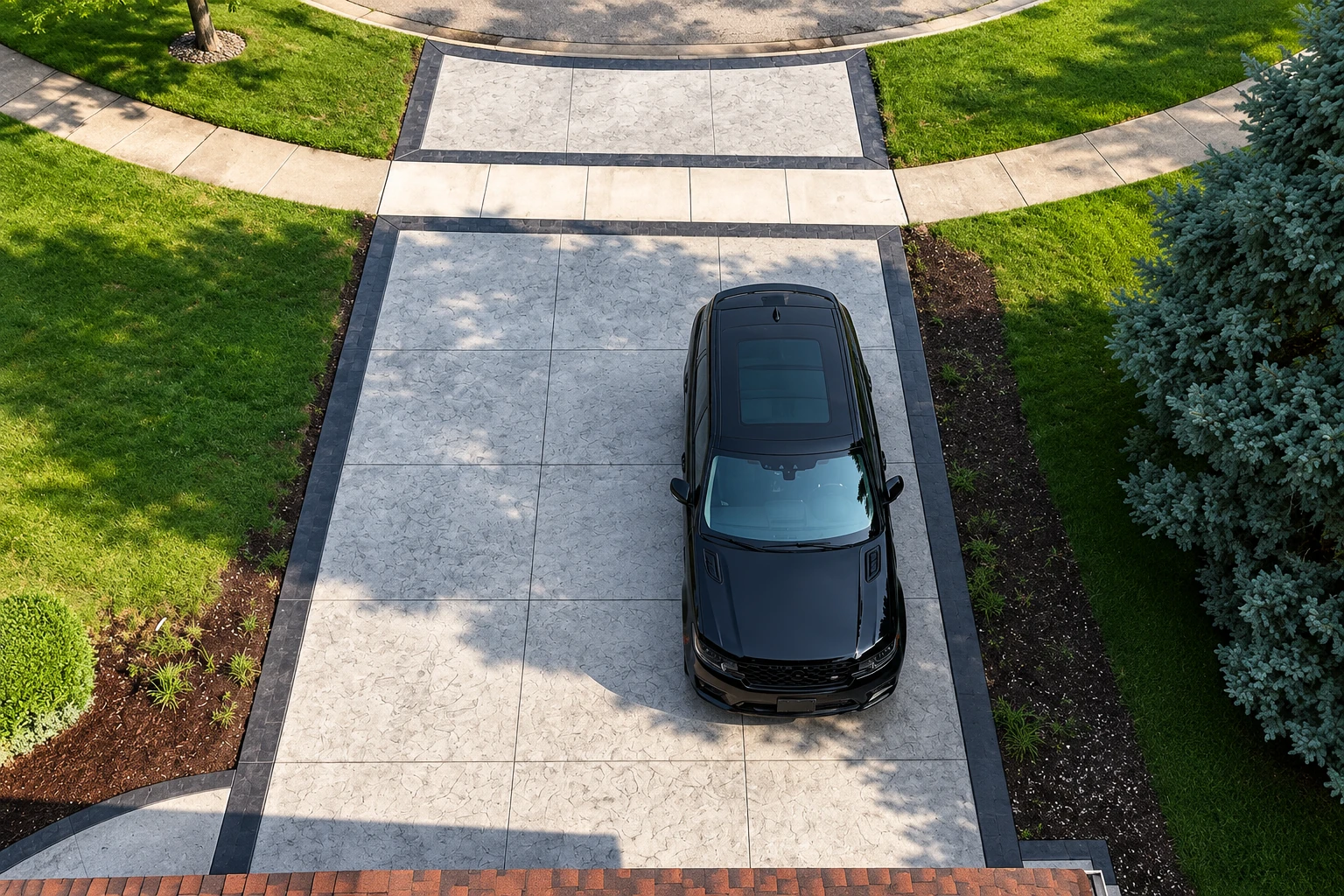
Most lot calls I get come from small business owners with a gravel or dirt lot. It ruts after rain, throws dust on the building and can't take a delivery truck without leaving a track. Some have an old slab that's cracked and sunk where the trucks turn. Either way, the fix starts below the surface, because pavement only holds up as well as what's under it.
The price moves with the size of the lot and how much of it has to carry trucks instead of cars. It also depends on how much work the ground needs before we pour, and whether the job needs a soil report on top of the permit. Your estimate puts each of those on its own line, so you can see where the money goes before anything gets dug.
The schedule turns on the paperwork and the weather more than the pour. The permit and any soil report come first, then the ground work, then the pour. After that comes curing, the wait while fresh concrete hardens before it takes traffic. Hot afternoons and rain both move pour day, and I'd rather wait a day than pour into conditions I don't like.